
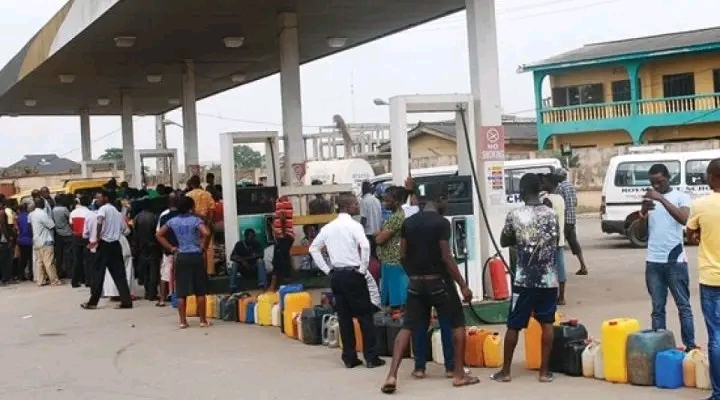
The pump price of Premium Motor Spirit, popularly known as petrol, has continued to rise across states, with the product selling for as much as N1,500 per litre in Kano, Yobe, Sokoto, Borno, Taraba and Zamfara, while prices have also risen sharply in other parts of the country.
This came as the Nigeria Labour Congress called on the Federal Government to urgently introduce measures to cushion the impact of the rising price of petrol, including the payment of reasonable wage awards to workers andthe sale of crude oil to local refineries in naira.

The NLC, in a statement signed by its President, Joe Ajaero, on Wednesday, said petrol now sells for about N1,430 per litre in major cities, with prices reportedly higher in less accessible locations.
The labour centre warned that the rising cost of petrol would further worsen the economic hardship facing Nigerians, noting that increases in transportation costs typically trigger higher prices of food, rent, school fees and otheressential goods and services.
Also, fuel marketers joined the NLC to call on the Federal Government to intervene in the petrol market, warning that prices could rise to N2,000 per litre if international crude oil prices continue to increase, while stakeholders urged the government to curb Dangote Petroleum Refinery’s growing influence over the market.
Prices across states
The cost of the commodity has continued to rise nationwide, selling for as high as N1,500 in many states. In Yobe State, residents reported that petrol was selling for between N1,500 and N1,520 per litre at some filling stations in Damaturu, the state capital.
A Damaturu resident, Hassan Auwalu, said he currently purchases petrol for N1,500 per litre. “I am currently purchasing petrol at N1,500 per litre. This is unprecedented, and the increaseis making things more difficult for ordinary residents,” Auwalu said.
Similarly, a tricycle rider in the state capital, Musa Ibrahim, said he buys the commodity for about N1,500 per litre at some Nigerian National Petroleum Company filling stations.
Also speaking, a civil servant, Lawan Garba, said some filling stations were selling petrol at an even higher price. “I am buying petrol at N1,520 per litre in some petrol stations,” Garba said.
In Kano State, petrol was selling for between N1,460 and N1,500 per litre at most filling stations in the metropolis. The increase h, man who…
Also, fuel marketers joined the NLC to call on the Federal Government to intervene in the petrol market, warning that prices could rise to N2,000 per litre if international crude oil prices continue to increase, while stakeholders urged the government to curb Dangote Petroleum Refinery’s growing influence over the market.
Prices across states
The cost of the commodity has continued to rise nationwide, selling for as high as N1,500 in many states. In Yobe State, residents reported that petrol was selling for between N1,500 and N1,520 per litre at some filling stations in Damaturu, the state capital.
A Damaturu resident, Hassan Auwalu, said he currently purchases petrol for N1,500 per litre. “I am currently purchasing petrol at N1,500 per litre. This is unprecedented, and the increase is making things more difficult for ordinary residents,” Auwalu said.
Similarly, a tricycle rider in the state capital, Musa Ibrahim, said he buys the commodity for about N1,500 per litre at some Nigerian National Petroleum Company filling stations.
Also speaking, a civil servant, Lawan Garba, said some filling stations were selling petrol at an even higher price. “I am buying petrol at N1,520 per litre in some petrol stations,” Garba said.
In Kano State, petrol was selling for between N1,460 and N1,500 per litre at most filling stations in the metropolis. The increase has forced some vehicle owners to park their vehicles, while commercial tricycle operators, popularly known as “yan’ adaidaita sahu”, have also increased their fares by about 50 per cent, depending on the distance.
The operators who used to charge N200 for a short distance now collect N300, while they charge between N500 and N700 for longer distances.
In Sokoto State, petrol prices rose tobetween N1,465 and N1,500 per litre in the metropolis. Checks by our correspondent showed that the product had risen from the previous price of N1,365 per litre.
At some filling stations, including AA Rano, Shafa and Total, petrol was sold for N1,465 per litre, while major marketers sold it for between N1,470 and N1,500 per In Borno State, a litre of petrol was selling for N1,500 at filling stations in Maiduguri, the state capital. A motorist, Ishaku Curutsi, confirmed to our correspondent that he bought petrol from Matrix filling station for N1,500 per litre on Wednesday. “I bought it this morning, and a litre at Matrix cost 1,500,” he said.In Taraba State, the price of petrol had risen to N1,500 per litre, with motorists and commuters reporting prices of between N1,500 and N1,700 per litre at some filling stations. The development is expected to further increase the cost of transportation and movement of goods within the state.
In Zamfara State, a litre of petrol was selling for N1,500 in Gusau, the state capital, and its environs. A visit to filling stations showed that motorists were purchasing the commodity for between N1,450 and N1,500 per litre, against the former price of N1,350At Danmarina filling station, motorists were seen purchasing the commodity amid complaints about the increase. One of the motorists, who gave his name as Musa Idris, said the current price was putting pressure on consumers.
Findings by The PUNCH also showed that petrol prices had risen in Kaduna, Benue, Kogi, Plateau, Bauchi, Adamawa, Imo, Rivers, Abia, Delta, Bayelsa, Ekiti, Edo and Kwara states.In Kaduna, the pump price of petrol rose to as much as N1,450 per litre at some filling stations in the metropolis and its environs.
A correspondent who monitored the development on Tuesday observed that the product was sold for N1,450 per litre at some filling stations operated by AA Rano and Shema. However, motorists buying from NNPC Mega filling stations paid N1,439 per litre.
At the NNPC Mega filling station along Aliyu Makama Road, Barnawa, our correspondentwho purchased petrol worth N10,000, got approximately 6.9 litres.
The development has sparked concern among motorists, with some saying the rising cost of petrol was putting additional pressure on household and transportation expenses.
A civil servant, Madam Cecilia Njoku, said she had resorted to leaving her car at home because of the cost of fuelling it. She said, “The situation is terrible. I had to drop my car at home because I can no longer afford petrol.”
In Benue State, petrol was selling for between N1,430 and N1,470 per litre in filling stations in Makurdi. Our correspondent, who visited some of the filling stations along Ankpa Quarter, including Enyo and Prime Power, found that the product sold for N1,450 and N1,470 per litre, respectively.
A female attendant at Prime Power filling station, who simply identified herself as Debby, lamented low patronage. She said, “The high price of fuel is affecting sales; most of our customers now are commercial motorcyclists. Ask yourself how many litresof fuel they buy in a day?”
Consequently, transport fares appeared to be increasing, as a distance that used to attract N400 had risen to N600.
In Dutse, Jigawa State, petrol was selling at most filling stations for between N1,460 and N1,480 per litre, depending on the station and its location within the metropolis. At roadside black-market points, however, a litre of petrol was sold for N2,000 and above, depending on availability and bargaining.
In Lokoja, Kogi State, retailers adjusted pumpprices following the announcement of price adjustments by Dangote last Friday. At a Mobil filling station along IBB Road near Obasanjo Square, Kpata, a litre of petrol sold for N1,450. The same price was recorded at NNPC, Kpata Market Road.However, at the NNPC filling station along Lokoja-Abuja Express Road, a litre sold for N1,400, while at MRS, owned by Dangote Group, it sold for N1,410.
In Jos, Plateau State, petrol sold for between N1,450 and N1,470 per litre across major filling stations in the metropolis. At AP Filling Station in Bukuru, the product sold for N1,470 per litre, while it was dispensed at N1,460 at F.O. Eze Oil and Gas along Rukuba Road and N1,450 at the Polo NNPC station.
For many workers commuting daily fromsatellite communities such as Tina Junction, Bukuru and Rukuba to Terminus Market, the increase has significantly raised transportation costs.
In Bauchi State, petrol was selling for N1,460 per litre in the metropolis, while motorists and other consumers at filling stations on the outskirts were buying the product for N1,470 per litre. The checks showed that the price difference between outlets within the metropolis and those on the outskirts stood at N10 per litre.In Adamawa State, petrol prices ranged from N1,400 to N1,470 per litre in Yola. At Fatinha filling station along Airport Road, the pump price was N1,465, while at MRS filling station opposite Bajure Junction, it was N1,400.
At Optima Energy along Yola-Girei Road, the pump price was N1,470, while NUT filling station sold at N1,455. At NNPC along the same road, the price was N1,436. In Mubi, the commercial centre of Adamawa State bordering the Republic of Cameroon, petrol prices ranged from N1,700 to N1,850 per litre.In Rivers State, filling stations in Port Harcourt and its environs were selling petrol for N1,400 per litre. Checks by our reporter showed that on Wednesday, petrol sold for N1,400 at Eternal Filling Stations and Whiz Filling Station.
However, at the NNPC filling station in Rumuodomaya near Port Harcourt, petrol sold for N1,385.
In Abia State, petrol sold for between N1,350 and N1,440 per litre. On Sunday, it was N1,310 per litre in Aba and N1,350 in Umuahia. However, by Wednesday, prices varied from one filling station to another.
A fuel station owner in Umuahia who spoke on condition of anonymity explained, “That was how we bought it: at high cost”.Transporters who reacted to the development lamented that “it is no longer business as usual”, pointing out that transferring the high cost to commuters was a moral burden to them.
In Delta State, most filling stations in the twin metropolitan cities of Warri and Effurun had pegged the price of petrol at N1,350 per litre. Many commercial tricycle operators were resorting to the black market, where they procured petrol at N1,300 per litre.A private car owner, Samson Oghenero, told our correspondent that he had decided to park his vehicle for a while, resorting to boarding commercial buses to his office as a result of the high cost of fuel.
In Asaba, Delta State, the pump price of petrol was between N1,400 and N1,410 per litre at filling stations. Checks by our correspondent on Wednesday showed that most of the stations visited sold PMS at N1,400 per litre, while TotalEnergies filling station along Summit Road sold the product at N1,410 per litre.In Yenagoa, Bayelsa State, the pump price of petrol had risen to about N1,400 per litre at several filling stations. A visit to various filling stations across the metropolis on Wednesday showed that motorists and other consumers were purchasing petrol at about N1,400 per litre.The development has continued to put pressure on motorists and residents who rely heavily on petrol for transportation, power generation and other daily activities. At some of the filling stations visited, motorists were seen queuing to purchase the product, while others moved from one station to another in search of cheaper petrol and shorter queues.
In Ado Ekiti, Ekiti State, a litre of petrol sold for between N1,380 and N1,450 on Wednesday. At the AP filling station on New Iyin Road, a litre of petrol was sold for N1,390, while it was N1,400 at Matrix, Adebayo, Ado Ekiti.
At Royal petrol station at Egbewa Junction, a litre of petrol went for N1,395, while the same quantity went for N1,450 at J.J. Roberts petrol station on Ilawe Road. A litre was also sold at N1,393 at AP filling station along Basiri-Nova Road.
In Edo State, the majority of filling stations in Benin sold a litre for between N1,420 and N1,425, while one station on Ekhewuan Road sold for N1,395.
In Auchi, Edo North, severalstations sold the product for between N1,410 and N1,415, while some other areas in Edo North had stations selling at N1,420.
In Edo Central, most filling stations sold for between N1,410 and N1,420, especially in Ekpoma, Irrua and Uromi, while some stations in remote locations sold for N1,422.
In Ilorin, Kwara State, petrol was sold between N1,379 and N1,405 per litre at filling stations.NLC’s demands
In its statement, titled “Save the Situation Now,” the NLC said the latest increase came at a time when government pressure on oil marketers to reduce pump prices in response to lower international crude prices was beginning to produce results.
According to the NLC, the latest surge has been linked to the resurgence of conflict in the Gulf, but Nigeria’s status as an oil-producing country means it should be able to provide some protection againstinternational oil market shocks.
It said, “As a nation, and as a people endowed with enormous fossil resources, we are deserving of a certain level of protection or buffer against the gales from the Gulf, and indeed, other gales.”
The NLC urged the Federal Government to immediately introduce measures to shield households and businesses from the impact of the higher fuel prices.
It specifically called for reasonable wage awards for workers, sufficient crude oil sales in naira to local refineries and an expansion of the country’s national petroleum storage capacity to strengthen energy security and prepare for emergencies.
The labour union said the measures would not only ease the burden on Nigerians but also create jobs, generate economic value and help address emerging security challenges.
It also argued that government intervention, including subsidies, should not be ruled out in an emergency.
“There is nothing wrong with the government subsidising the needs of citizens, especially in emergency situations like this,” Ajaero said, adding that oil-producing countries were introducing different forms of intervention or palliatives to protect their citizens from the effects of the current global energy crisis.
The NLC further said the Federal Government had benefited from from higher international crude prices, claiming that crude was currently selling about $35 to $40 per barrel above the benchmark used in the national budget.
It argued that the additional revenue should be regarded as a windfall that could provide fiscal space for interventions aimed at protecting citizens from the rising cost of living.
The union also raised concerns over the reported importation of crude by some local refineries, describing the development as contrary to the objective of developing domestic refining capacity.
Cc: Punch