By Sulaimon Olanrewaju
The Ibadan Circular Road has done far more than reshape the physical landscape of Oyo State; it has detonated a political crisis inside the All Progressives Congress (APC), exposing a party locked in open warfare with itself over a project it neither conceived nor funded. As the APC led Federal Government rushes to smuggle the Circular Road into its list of achievements, the party’s own gubernatorial candidate in Oyo State, Senator Sharafadeen Alli, is simultaneously tearing the same project to shreds – calling it inflated, defective, and politically tainted. In one monumental road, the APC has managed both to celebrate and to sabotage the same achievement, revealing a level of internal confusion and desperation that Governor ‘Seyi Makinde’s infrastructure legacy has now made impossible to hide.
The Ibadan Circular Road began in 2005 under Governor Rashidi Ladoja, who conceived the 110 km project and acquired a 150 metre Right of Way. In 2017, Governor Abiola Ajimobi expanded the corridor to 1 kilometre in line with the new Ibadan Master Plan and concessioned it to ENL. When Governor Makinde assumed office in 2019, the project was dormant, prompting a review of its concession structure. In July 2021, the state re awarded the entire project to the SEL–Vydra Consortium, marking the true start of active construction. At no point did the Federal Government make any contribution to the project.
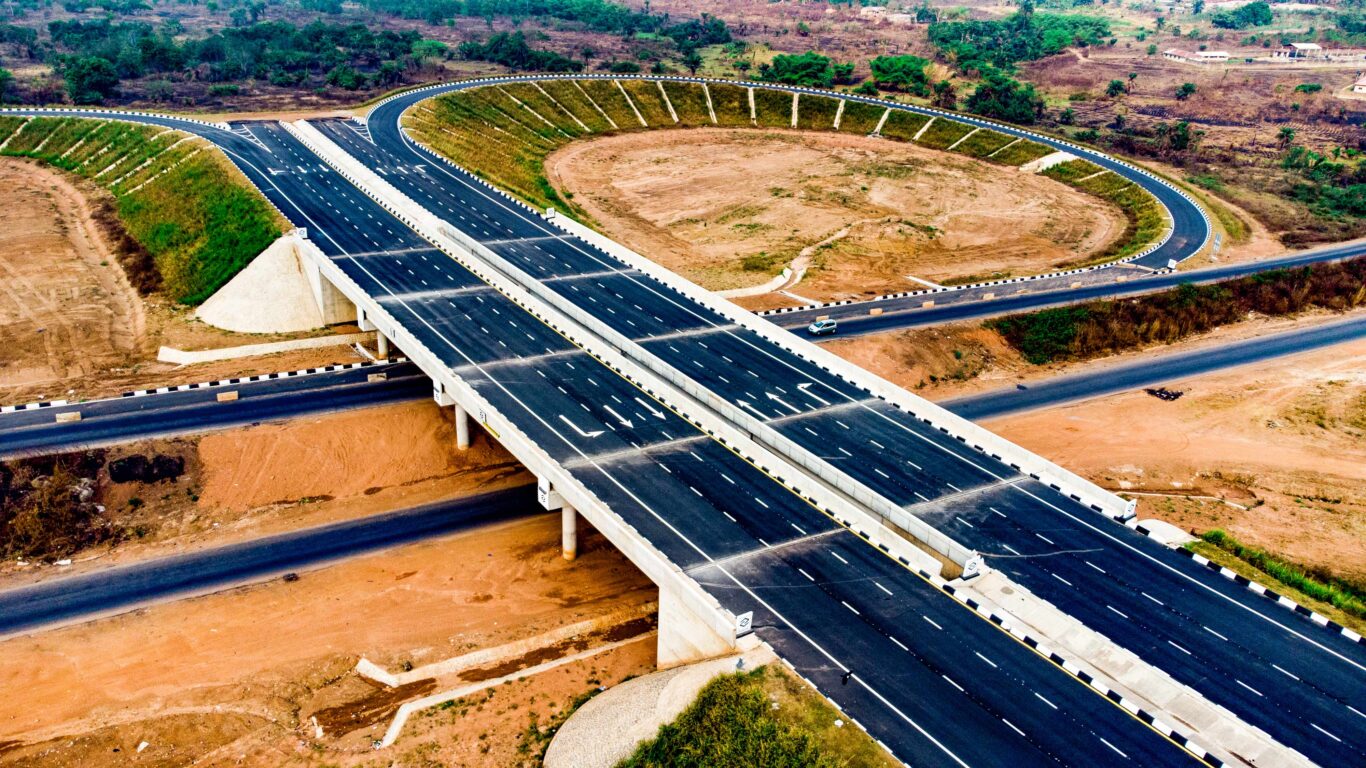
What makes the APC’s internal clash astonishing is that the Ibadan Circular Road is not a project that invites controversy. It is a project that commands admiration. Its sweeping geometry, modern interchanges, and wide, meticulously engineered carriageways have given Ibadan a new visual and infrastructural identity – one that signals ambition, competence, and a metropolis ready for the future. Even in its partially completed state, the road has begun to transform mobility across the city, easing congestion, opening new development corridors, and offering a cleaner, faster alternative to old, overburdened routes. Ordinarily, such a project unites political actors in praise. Yet within the APC, this landmark achievement has become the trigger for a political firestorm, turning a symbol of progress into the epicentre of a bitter internal war.
A particularly striking dimension of this conflict is Senator Sharafadeen Alli’s posture. In his scramble for political mileage, Alli, who is addled, has chosen to deny the beauty, scale, and transformative power of a project that members of his own party at the national level are openly applauding. His attacks on the Circular Road are not rooted in technical critique or policy analysis; they are driven by the urgency of cheap politics. Even as the APC Federal Government attempts to showcase the road as a symbol of progress, Alli insists on portraying it as a failure; dismissing the very features, from modern interchanges to improved mobility and new development corridors, that have earned the project widespread admiration. In doing so, he positions himself against an achievement that is visibly reshaping Ibadan and contradicts the narrative of his own party’s leadership.
Instead of rallying around this transformative project, the APC has turned it into a stage for internal combat. The Federal Government’s eagerness to appropriate the Circular Road as its own achievement – despite not conceiving, funding, or executing it – has collided head on with Alli’s determination to weaponize the same project against the incumbent governor. What should have been a straightforward celebration of progress has become a political tug of war, with Abuja dragging the road into its national scorecard while Alli drags it into the mud of local politicking. In the process, the APC has exposed a deep fracture within its ranks: a party unable to agree on whether the Circular Road is a triumph worth claiming or a failure worth attacking.
What emerges from this clash is not merely a disagreement over infrastructure, but a revealing portrait of a party struggling with its own identity. The APC Federal Government, desperate to showcase development footprints across the Southwest, has latched onto the Circular Road as a convenient symbol of progress, though it played no role in its conception or execution. Meanwhile, Alli, driven by the urgency of local politics, has chosen to undermine the same project to weaken the incumbent. These two impulses – one grasping for borrowed glory, the other tearing down genuine achievement – collide violently at the Circular Road, turning a landmark project into a battlefield for competing ambitions within the same political family.
What this contradiction ultimately reveals is a troubling pattern within the APC at both the state and national levels. A party that can, in one breath, claim credit for a project it neither conceived nor funded, and in the next breath attack the same project as a failure, is a party struggling with consistency, sincerity, and credibility. Such behaviour reflects a political culture built on opportunism rather than principle; one that thrives on falsehood, selective narratives, and convenient distortions. When a party oscillates so wildly between praise and condemnation depending on whose interest is served, it shows that it is not deserving of the public’s trust; it shows that it is not a party that should be entrusted with the destiny of the people.
In the end, the Ibadan Circular Road does more than showcase the beauty of modern infrastructure; it exposes the fault lines within a political party that cannot decide whether to celebrate progress or sabotage it. It reveals a party torn between national ambition and local desperation, between the urge to claim and the urge to destroy. It reveals a party at war with itself over a road that has become too important, too visible, and too politically valuable to ignore. And in that contradiction lies the story of a party whose internal civil war was birthed not by ideology or policy, but by a road built to move a city forward – a party confused about what is good for the people, and one that should be rejected at the polls, not just in Oyo State but across the country.
Dr Olanrewaju is the Special Adviser (Media) to the Governor of Oyo State
How Seyi Makinde-built Circular Road sparked civil war in APC ||•By Sulaimon Olanrewaju

ByNews Editor > Raymon Jay
Oct 3, 2026