
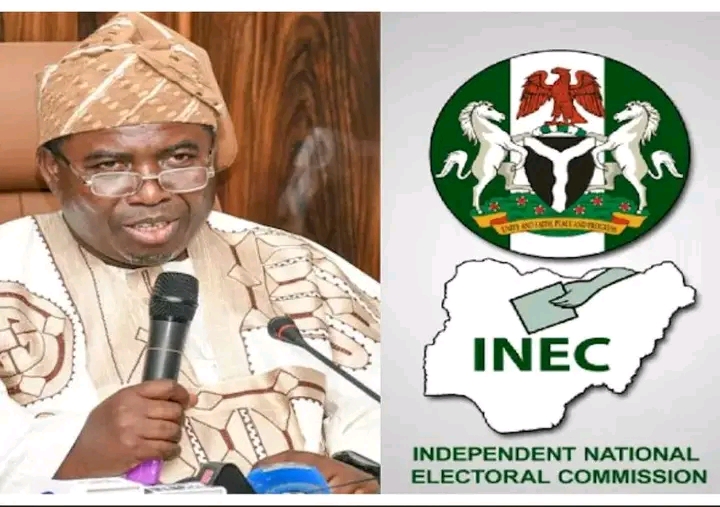
ABUJA — The Independent National Electoral Commission (INEC) is deploying artificial intelligence to check electronically entered election result figures against scanned result sheets before upload, as Nigeria prepares for the 2027 general election.
The move is part of efforts to reduce human error and strengthen electoral transparency, amid growing concerns that AI-generated misinformation, cloned videos and synthetic voices could undermine voters’ confidence in the electoral process.
INEC’s Director of Information and Communication Technology, Dr Lawrence Bayode, disclosed this at the launch of the AI for Elections Programme and Hackathon, organised by Rise Networks in Abuja on Thursday.
Bayode said the commission had established an Artificial Intelligence Division within its ICT Department and was developing a framework to guide the responsible deployment of the technology.

Explaining the resultverification process, he said the system would flag discrepancies between electronically entered figures and scanned result sheets, requiring them to be resolved before upload.
“If the electronically entered figures are consistent with the scanned results, the system allows the results to be uploaded automatically to the portal,” he said.
He said the initiative was intended to improve efficiency, reduce human error and ensure that results published on INEC’s portal reflected those recorded at polling units.
But Bayode warned that electoral innovation must not compromise security, operational stability or public confidence, urging developers to work with publicly available or authorised data without exposing critical election infrastructure.
Meta’s Head of Public Policy for Anglophone West Africa, Sade Dada, said AI had made it increasingly difficult for citizens to distinguish genuine information from manipulated content, creating fresh challenges for election integrity.
Elections are decided by voters. Voters make decisions based on what they believe, and what they believe depends on what they can trust,” Dada said.She identified synthetic voices and cloned videos as emerging threats but argued that the technology could also help detect manipulated content and make credible electoral information accessible in local languages.
Dada cited GovGuide Nigeria, an AI-powered chatbot developed through a partnership involving Meta, the Federal Ministry of Communications, Innovation and Digital Economy, the National Centre for Artificial Intelligence and Robotics, and Nigerian company Publica AI.The chatbot provides government information in English, Hausa, Igbo and Yoruba, a model she said could be adapted to help voters access reliable information about registration, polling units and election procedures.
“Build something that makes the truth easier to find than falsehood,” she challenged developers.The programme’s convener, Dr Toyosi Akerele-Ogunsiji, said the initiative would bring together developers, researchers, journalists, election experts and civil society organisations to build functional solutions to electoral challenges ahead of 2027.
She said the programme followed the development of Run-Am, an AI-powered misinformation detection and fact-checking application created for Nigeria’s 2023 elections.Buy Maps
The new initiative will focus on trustworthy electoral information, data analysis, inclusive andmultilingual civic technology, cybersecurity, election observation and citizen accountability. It will also include an AI Innovations Development Hub and a Community of Practice to support promising solutions beyond the hackathon.
Applications opened on Thursday, October 22, and will close on November 12, 2026. Eligible Nigerians aged 18 and above may apply individually or in teams of up to four.
The competition has a N10 million prize pool, with N4 million for the overall winner, N2.5 million forsecond place and N1.5 million for third place, alongside four special awards worth N500,000 each.
Professor Victor Odumuyiwa of the University of Lagos urged INEC to prioritise homegrown solutions, arguing that Nigerian developers were better placed to understand the country’s electoral challenges.Buy Maps
“We understand our context, we know the problems, and we are the ones best placed to solve them,” he said.
Lawyer Tsema Ede, who addressed the legal and ethical implicationsof AI in elections, said the technology offered opportunities for voter education, electoral malpractice monitoring and cybersecurity but required safeguards against misuse.
The organisers said the programme would remain non-partisan, barring projects designed to influence voter preferences or interfere with electoral administration. Unauthorised testing of live electoral systems is also prohibited, while winning the competition will not automatically authorise operational deployment.
Cc: Vanguard