
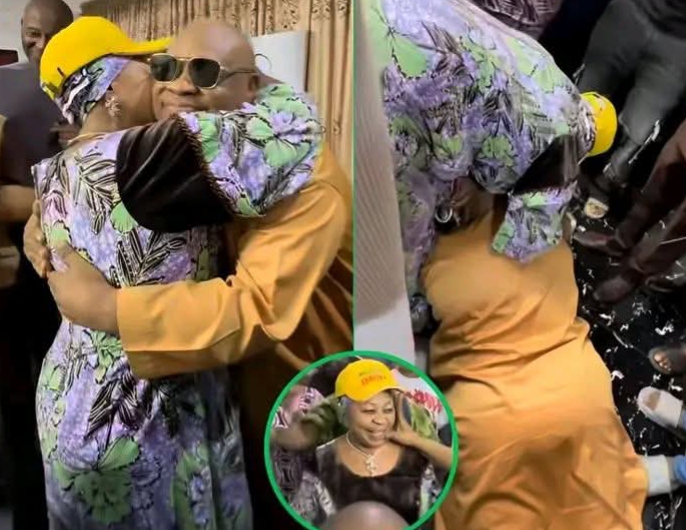
In every family, there comes a time when parents must ask themselves an important question: What will happen to my children when I am no longer there to hold them together? Will they stand by one another, celebrate each other’s successes and protect the family bond, or will disagreements over money, recognition, inheritance and personal interests tear them apart? The contrasting public stories of the Adeleke family and the Okoye brothers of P-Square offer Nigerian parents an important lesson about the responsibility of building love among their children.
The Adeleke family has, over the years, demonstrated the enormous strength that can come from maintaining a strong family network. Governor Ademola Adeleke’s political journey has been surrounded by the influence and support of his family. His late brother, Isiaka Adeleke, was a former governor and senator, while his elder brother, Adedeji Adeleke, is a prominent businessman. The family has also been connected through Davido, whose relationship with his uncle, Governor Adeleke, has frequently attracted public attention.


What makes the Adeleke story particularly interesting is not simply their wealth, political influence or public visibility. It is the picture of family members supporting one another across different fields. One brother can be a politician, another a businessman, another a music superstar, yet their different paths do not necessarily have to become reasons for rivalry. When family members understand that one person’s success does not diminish another person’s importance, the entire family becomes stronger.
Governor Adeleke’s political success can therefore be viewed not only through the lens of personal ambition but also through the strength of the environment around him. Political success requires resilience, relationships and emotional support. Having family members who can celebrate victories, provide encouragement during difficult moments and stand together publicly can make a significant difference. The lesson for parents is clear: raise children to become one another’s support system, not one another’s competitors.
This is where the story of Peter and Paul Okoye becomes a painful contrast. P-Square was once one of Africa’s most successful musical groups. The twins built an extraordinary career together, creating songs and performances that made them household names across Nigeria, Africa and beyond. Yet the same brothers who once appeared inseparable eventually experienced a bitter public disagreement that led to the collapse of the group and years of separation.

The P-Square experience should make every parent uncomfortable—not because outsiders know every detail of what happened within the family, but because it demonstrates how easily unresolved disagreements can become deeply personal. Questions surrounding management, money, creative control, individual recognition and other family issues can become explosive when communication breaks down. When siblings stop seeing themselves as members of the same family and begin seeing each other primarily as opponents, the consequences can be devastating.


For fathers, there is a powerful lesson here. Providing food, school fees, shelter and financial security is important, but fatherhood goes beyond provision. Fathers must also deliberately build relationships among their children. They should teach sons and daughters that wealth is temporary but family is enduring. They should discourage unnecessary competition and favouritism, address conflicts early and create an atmosphere where every child feels valued.
Mothers equally have a critical role. Mothers are often the emotional centre of the home and can influence how children relate to one another for decades. A mother who constantly compares one child with another, openly favours one child or allows old grievances to remain unresolved may unintentionally plant seeds of resentment. But a mother who teaches forgiveness, fairness, empathy and cooperation can help create siblings who remain united even after they become successful adults.
Parents must also understand that children do not stop needing guidance simply because they become adults. When siblings become wealthy, famous or influential, new challenges emerge. Their relationships may involve businesses, properties, investments and public responsibilities. At this stage, parents should encourage transparency, proper documentation and mature communication. Love should not replace good agreements, and good agreements should not replace love. Both are necessary.
The Adeleke example reminds us of the possibilities that emerge when family members can celebrate one another’s achievements. A successful family is not one in which nobody disagrees. It is one in which disagreement does not destroy affection. Families will argue. Brothers will have different opinions. Sisters will pursue different interests. Children may even enter different political or professional camps. But mature families learn how to disagree without permanently breaking the bridge that connects them.
The P-Square story, on the other hand, reminds us that reconciliation should not be postponed until relationships become almost impossible to repair. By the time a disagreement becomes public, years of accumulated resentment may already exist. Parents should therefore teach their children to address problems while they are still small. Say sorry early. Forgive early. Talk early. A family should never allow pride to become more important than the people who share its blood.

Ultimately, the greatest lesson from the Adeleke and Okoye stories is for today’s fathers and mothers: do not only build successful children; build children who can remain successful together. Give them education, inheritance and opportunities, but also give them the values of love, forgiveness, fairness and mutual respect. Governor Adeleke’s publicly visible family bond shows the strength that can come when family members stand together, while the P-Square saga shows how painful family division can become when disagreements are allowed to overpower love. In the end, a parent’s greatest legacy may not be the house, money or business left behind—it may simply be children who, after the parents are gone, still have one another.
Raymon Jay Korede, The Editor of The Click News Nigeria writes in Osogbo.
raymonjaykorede@gmail.com
07039301342