
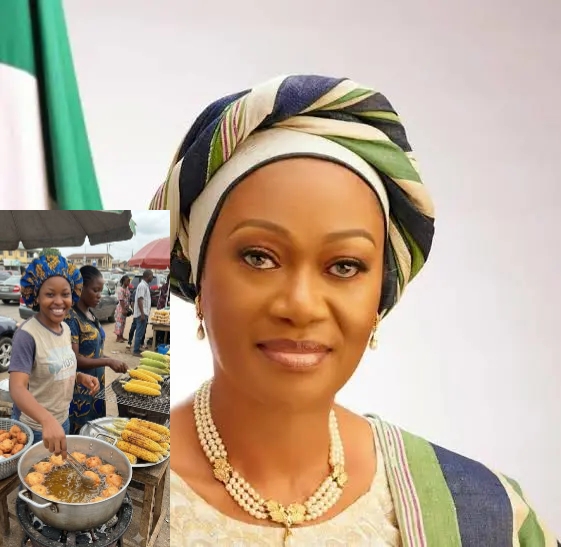
The recent advice by Nigeria’s First Lady encouraging citizens to embrace the business of frying and selling akara has sparked widespread debate across the country. While many viewed the statement as a practical suggestion for self-employment, others interpreted it as a reflection of the widening gap between the realities of ordinary Nigerians and the nation’s political elite. Beyond the controversy, the remark has reopened discussions about wealth distribution, economic inequality, and the government’s role in creating opportunities.
Nigeria is richly endowed with natural and human resources. As Africa’s largest oil producer and one of its biggest economies, the country has generated enormous wealth over the decades. However, the benefits of this wealth have not been evenly distributed. Millions of Nigerians continue to struggle with unemployment, inflation, and rising living costs despite the country’s vast economic potential.
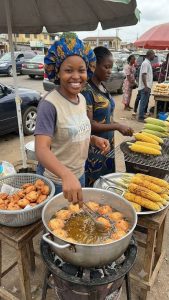
The First Lady’s akara advice highlights the growing dependence on small-scale entrepreneurship as a survival strategy. Selling akara has long been an honourable occupation that provides income for thousands of households. Yet, many Nigerians argue that encouraging citizens to rely on petty trading should not replace efforts to build a stronger economy capable of providing decent jobs.
For many graduates, the suggestion raised uncomfortable questions about the value of education in an economy where formal employment opportunities remain scarce. Young people invest years acquiring knowledge and professional skills, only to find themselves competing for very limited vacancies or turning to informal businesses to survive.

The informal sector undoubtedly contributes significantly to Nigeria’s economy. Small businesses such as food vending, tailoring, transportation, and retail trading employ millions of people. Akara sellers, in particular, play an important role in providing affordable meals while supporting local agricultural value chains through the purchase of beans, cooking oil, and other ingredients.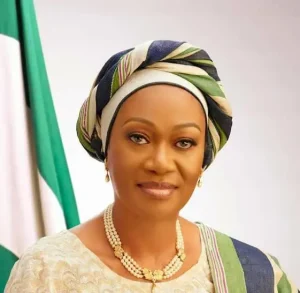
Nevertheless, depending heavily on informal businesses exposes deeper structural problems. It reflects an economy where access to quality employment, industrial growth, and sustainable investment remains inadequate. Many citizens believe government policies should focus on expanding industries that create large-scale employment rather than merely encouraging subsistence businesses.
The debate also draws attention to the unequal distribution of wealth among Nigerians. While a small percentage of the population controls significant economic resources, a large majority struggles to meet basic needs. This imbalance has contributed to widening social inequality and declining public confidence in economic policies.
Economic experts have consistently argued that wealth distribution is not simply about sharing money but about ensuring equal access to opportunities. Quality education, healthcare, infrastructure, affordable credit, and employment opportunities enable citizens to improve their living standards through productive work rather than depending solely on survival businesses.
The controversy surrounding the akara advice also reflects the importance of public communication by political leaders. Citizens expect messages that acknowledge their daily struggles while presenting realistic solutions. Statements perceived as insensitive can quickly become symbols of broader frustrations with governance and economic hardship.
At the same time, entrepreneurship should not be dismissed. Many successful Nigerian businesses began as small ventures. Selling akara, like many other legitimate trades, demonstrates resilience, creativity, and determination. Honest labour deserves respect regardless of its scale or profitability.
However, entrepreneurship thrives best in an enabling environment. Stable electricity, affordable loans, good roads, security, and fair taxation are essential for small businesses to grow beyond subsistence level. Without these foundations, many entrepreneurs remain trapped in cycles of low income and limited expansion.
The larger issue therefore extends beyond akara itself. It concerns whether Nigeria’s economic policies are creating pathways for upward mobility. Citizens aspire not only to survive but also to build wealth, own businesses, secure meaningful employment, and provide better futures for their families.
The conversation has also reminded policymakers that economic advice must be accompanied by concrete action. Investments in agriculture, manufacturing, technology, and vocational training can generate employment while strengthening the country’s productive capacity. Such measures would allow entrepreneurship to complement—not replace—formal economic growth.
Ultimately, the First Lady’s comment has become more than a discussion about frying bean cakes. It has evolved into a national conversation about poverty, dignity, opportunity, and the responsibilities of leadership in addressing economic inequality. The reactions reveal a society eager for policies that translate Nigeria’s abundant resources into shared prosperity.
As Nigeria continues its journey toward economic development, the debate over the akara advice should serve as a reminder that true wealth distribution goes beyond encouraging individual hustle. It requires deliberate policies that create opportunities, reduce inequality, and ensure that the nation’s wealth benefits all citizens rather than a privileged few.
Rahman Taofeeq ‘Raymon Jay’ is the Editor of The Click News Nigeria. He writes from Ibadan.