
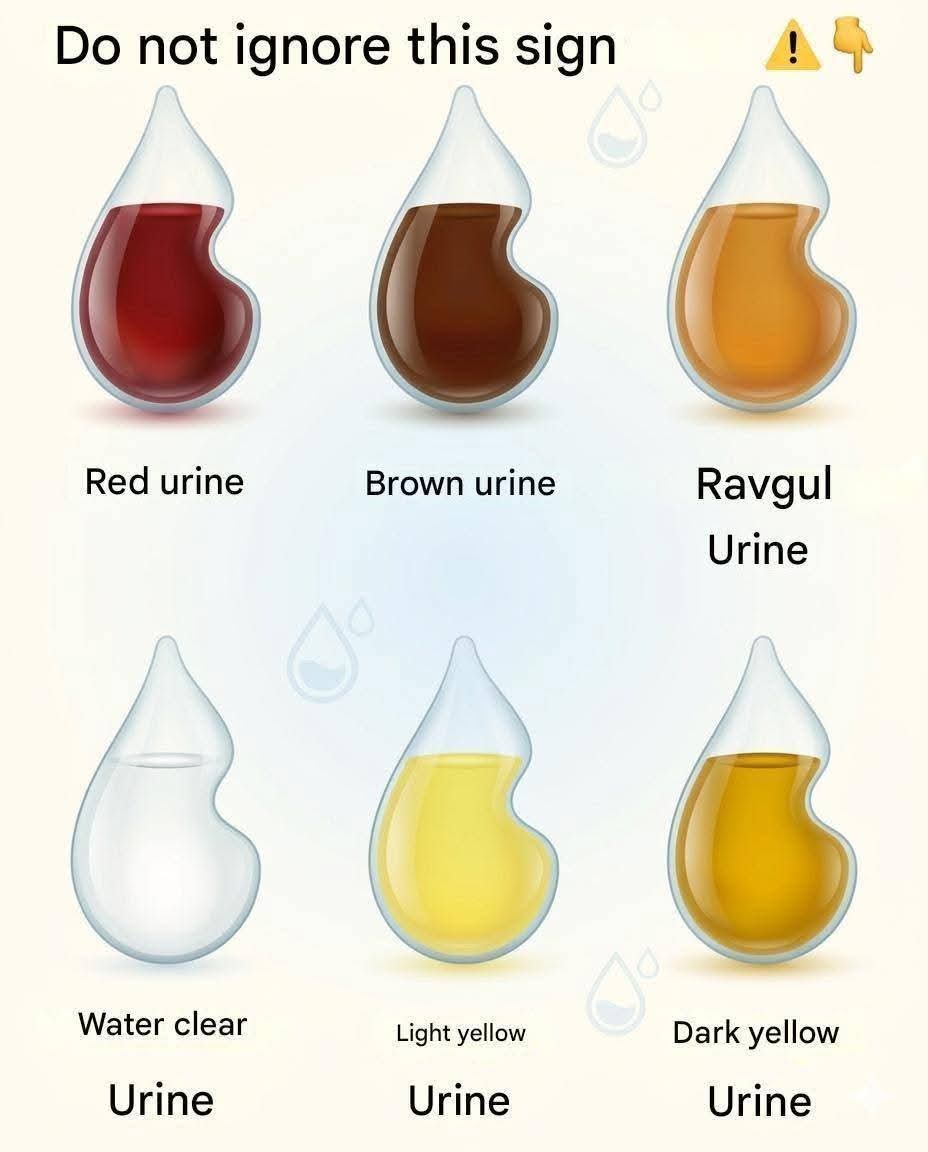
Urine can reveal useful information about hydration and, in some situations, may provide clues about what is happening in the urinary system or elsewhere in the body.
Most healthy urine ranges from clear to pale yellow. Its color can change throughout the day depending on how much fluid you drink, what you eat, and which medications or supplements you take.
However, a persistent or unusual change in urine color—especially when accompanied by pain, fever, blood, or other symptoms—should not be ignored.
What Is the Normal Color of Urine?
Healthy urine is generally clear to pale yellow. The yellow color comes from natural pigments in urine.

When you drink more fluids, the urine becomes more diluted and may look almost clear. When you drink less, it becomes more concentrated and usually appears darker yellow.
A darker yellow urine sample does not automatically mean that you have a medical condition. It can simply be a sign that you need more fluids.
Dark Yellow Urine
Dark yellow urine is commonly associated with concentrated urine and dehydration.
Other symptoms of dehydration can include thirst, dry mouth, tiredness, dizziness, and urinating less frequently than usual.
If you are otherwise well, increasing your fluid intake may gradually return the urine to a lighter color.
However, people with certain medical conditions may have specific fluid restrictions, so hydration advice should be individualized when necessary.
Completely Clear Urine
Very clear urine often means that the urine is highly diluted.
This can happen after drinking a large amount of fluid. Clear urine by itself is not usually a sign of illness.
Rather than trying to maintain completely colorless urine, a pale-yellow color is commonly used as a practical indication of adequate hydration.
Pink or Red Urine
Pink, red, or reddish-brown urine deserves more attention because it can sometimes indicate blood in the urine.
Blood may occur with conditions such as urinary tract infections, kidney stones, certain kidney problems, or other urinary tract conditions. In some cases, more serious diseases can also cause blood in the urine.
However, red or pink urine does not always mean there is blood. Foods such as beets, blackberries, and rhubarb can change urine color, and certain medications can do the same.
If you cannot clearly explain red or pink urine by something you recently ate or a medication you take, it is important to have it evaluated by a healthcare professional.
Orange Urine
Orange urine can have several possible causes.
Dehydration can make urine more concentrated and darker, while certain medications and vitamins can also produce an orange or yellow-orange appearance.
In some circumstances, orange urine can be associated with a liver or bile-duct problem, particularly when it occurs together with pale-colored stools or yellowing of the skin or eyes.
Persistent orange urine should therefore be discussed with a healthcare professional, particularly if other symptoms are present.
Brown or Cola-Colored Urine
Dark brown or cola-colored urine has several possible causes, including dehydration, certain foods and medications, and some medical conditions affecting the liver or kidneys.
Very dark urine can also occur after extreme physical exertion in association with muscle injury. This can potentially affect the kidneys and requires medical attention.
If urine suddenly becomes tea-colored, cola-colored, or persistently brown without an obvious explanation, seek medical advice.
Cloudy or Milky Urine
Cloudy or murky urine can sometimes occur with urinary tract infections or kidney stones
A urinary infection may also be accompanied by symptoms such as burning during urination, frequent urination, lower abdominal discomfort, or an unusual odor.
Cloudiness does not provide enough information to diagnose an infection by itself. A urine test may be necessary to determine the cause.
Blue or Green Urine
Blue or green urine is unusual, but it can occur for several reasons.
Certain food dyes, medications, and dyes used during medical testing can change urine to blue or green shades. In some cases, particular urinary tract infections can also produce green urine.
An unusual color that persists without an obvious explanation should be discussed with a healthcare professional.
What About Strong-Smelling Urine?
Urine normally has a mild odor, but concentrated urine can have a stronger smell because it contains less water relative to waste products.
Certain foods, vitamins, and medications can also alter urine odor. Occasionally, a change in smell can occur with a urinary infection or other medical condition.
Smell alone cannot reliably determine whether a person has an infection.
When Should You See a Doctor?
Urine color is only one piece of information. You should consider seeking medical advice if you experience:
Blood or unexplained red urine
Persistent dark brown or cola-colored urine
Persistent orange urine
Cloudy urine accompanied by urinary symptoms
Pain or burning when urinating
Significant abdominal, side, or back pain
Fever or feeling unwell
A persistent unexplained change in urine color
Blood in the urine should be evaluated even when there is no pain.
Can Urine Color Diagnose a Health Problem?
No. Urine color alone cannot diagnose a disease.
A healthcare professional may ask about your symptoms, medications, supplements, diet, and fluid intake. Depending on the situation, testing such as a urinalysis or blood tests may be used to investigate the cause of an unusual change.
Final Thoughts
Your urine can provide a useful everyday clue about hydration, but its color should not be treated as a medical diagnosis.
Pale yellow urine is generally considered a normal appearance, while darker urine can occur when you are dehydrated. Foods, vitamins, medications, and medical conditions can also change urine color.
The most important thing is to pay attention to persistent or unexplained changes, particularly when they occur alongside pain, fever, blood, or other symptoms.
When in doubt, a healthcare professional can determine whether further testing is needed.